
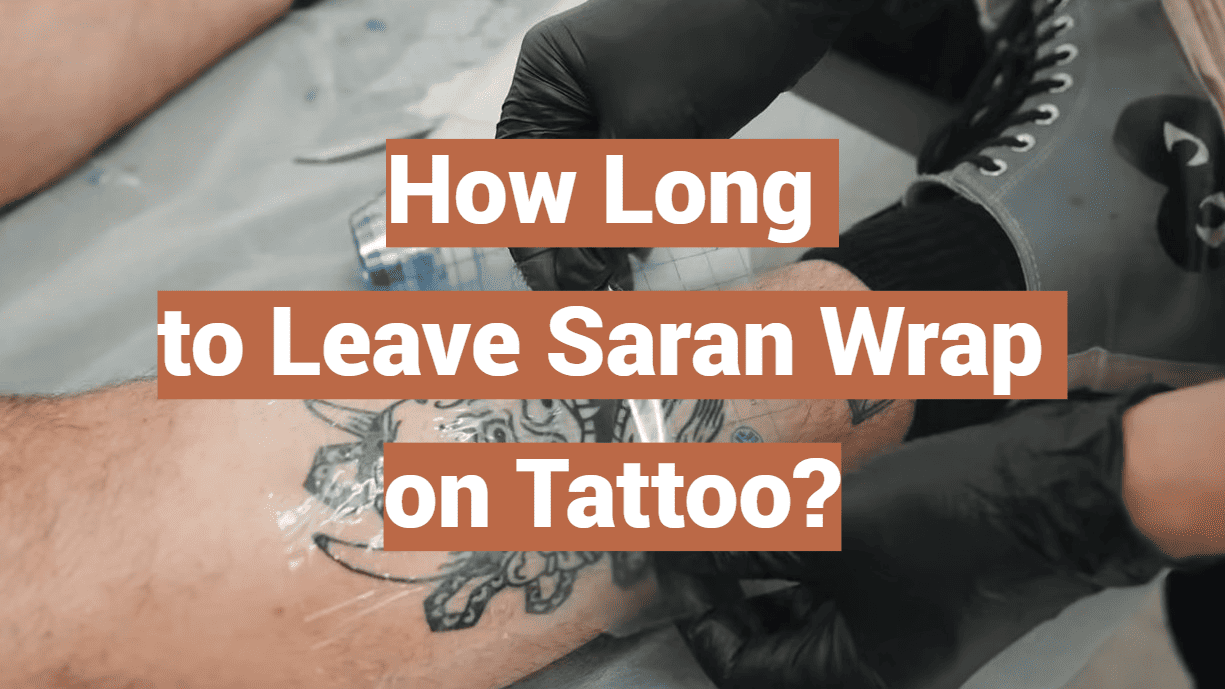
Believe it or not, nearly 30% of people with tattoos experience a complication during the healing process. Often, this stems from simple confusion right after leaving the studio.
Getting a fresh tattoo is an exciting milestone. But the work of your tattoo artist is only half the journey. Your skin now has a beautiful new piece of ink, but it’s also an open wound that needs careful attention.
Many people feel unsure about the next steps. Questions about the initial protective covering are common. When should it come off? Is it safe to put another one on? Finding the right balance between protection and letting your skin breathe is crucial for healing.
This guide is here to clear up the confusion. We provide clear, expert-backed information on protective coverings and aftercare. Our goal is to help your new tattoo heal perfectly, ensuring vibrant, lasting results.
Recommendations can vary, but understanding the core principles empowers you to make the best choices for your specific situation. With the right knowledge, you can minimize risks and enjoy your art for years to come.
Key Takeaways
- The initial covering protects your fresh tattoo from bacteria and irritation.
- Leaving the first wrap on for too long can trap moisture and hinder healing.
- Proper aftercare is essential for the final appearance and health of your skin.
- Always follow the specific instructions provided by your tattoo artist.
- Understanding the healing process helps you make informed aftercare decisions.
- Balancing protection with allowing the skin to breathe is a key to success.
Preparing for Aftercare: What to Expect with a New Tattoo
The moment your tattoo session ends, your body immediately begins its natural repair process. This initial phase sets the foundation for how your artwork will look once fully healed. Proper attention during these first days makes all the difference.
Understanding Your Tattoo as an Open Wound
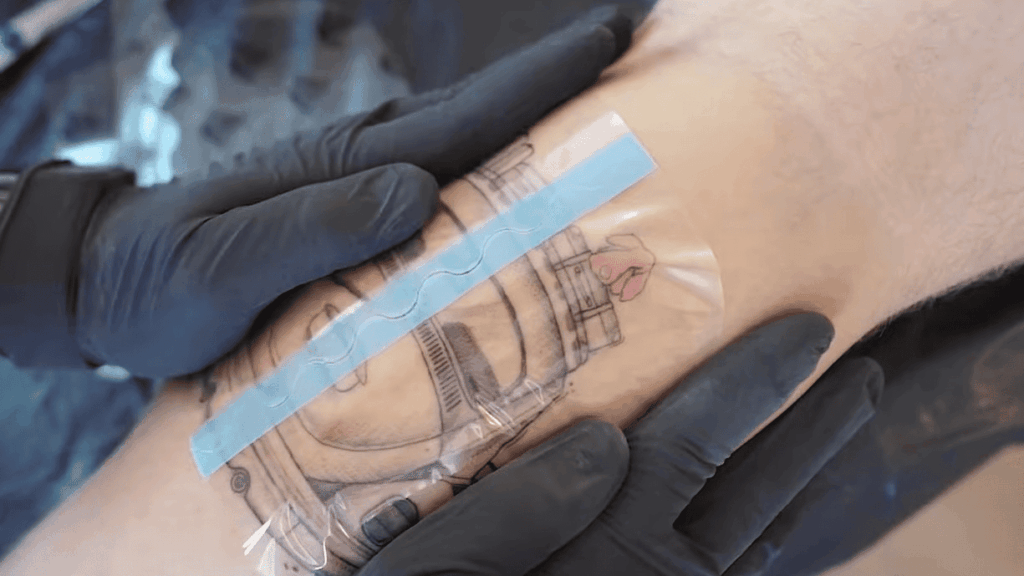
Think of your fresh ink as more than just art—it’s essentially an open wound. The tattooing process uses needles that puncture the skin thousands of times per second. This creates microscopic openings where ink settles.
Your immune system responds instantly to this trauma. White blood cells and plasma rush to the area to begin the healing process. You might notice some blood, clear fluid, or excess ink seeping out initially. This is completely normal as your body works to repair the skin barrier.
Essential First Steps Post-Tattoo Session
The first 48 hours are absolutely critical for proper healing. Your tattoo artist will provide specific aftercare instructions before you leave the studio. Make sure you understand these directions completely.
Prepare a clean space at home with fresh towels and gentle soap. Follow your artist’s guidance about when to remove the initial protective covering. Mental preparation for the commitment required during the healing process is just as important as physical preparation.
Remember that different artists have different preferred methods based on their experience. Trusting your specific tattoo artist’s advice over generic online information leads to better results. Your careful attention now directly impacts how vibrant your colors remain and prevents complications.
The Role of Saran Wrap in Tattoo Healing
Right after the needle stops, your tattoo artist reaches for a familiar roll of plastic film. This immediate application serves as your first line of defense during the critical healing phase.
Why Tattoo Artists Use Saran Wrap
Tattoo artist Liv Farrington explains the primary purpose:
“Cling film creates a barrier to keep out anything that could cause an infection or upset the tattoo with unwanted bacteria.”
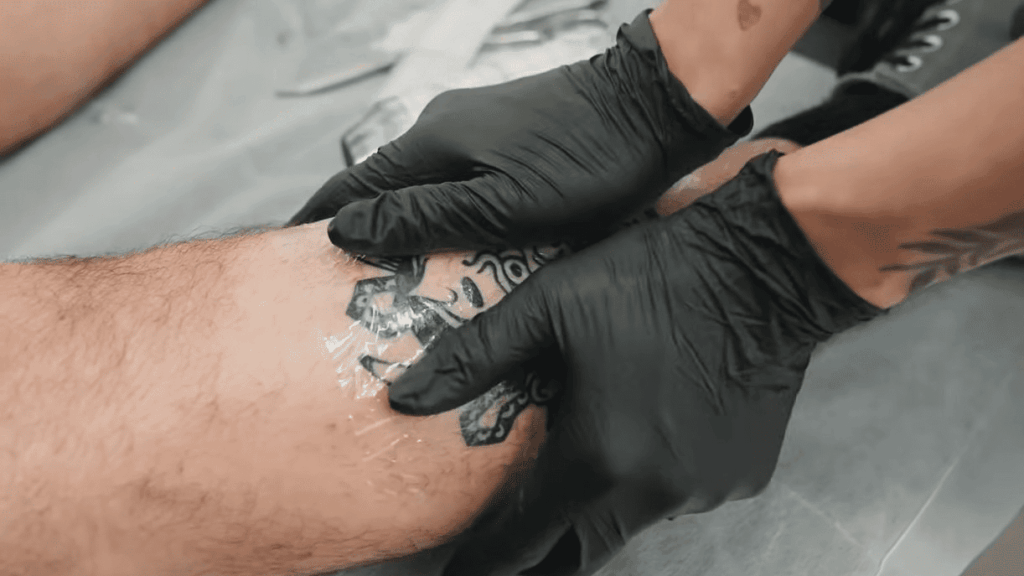
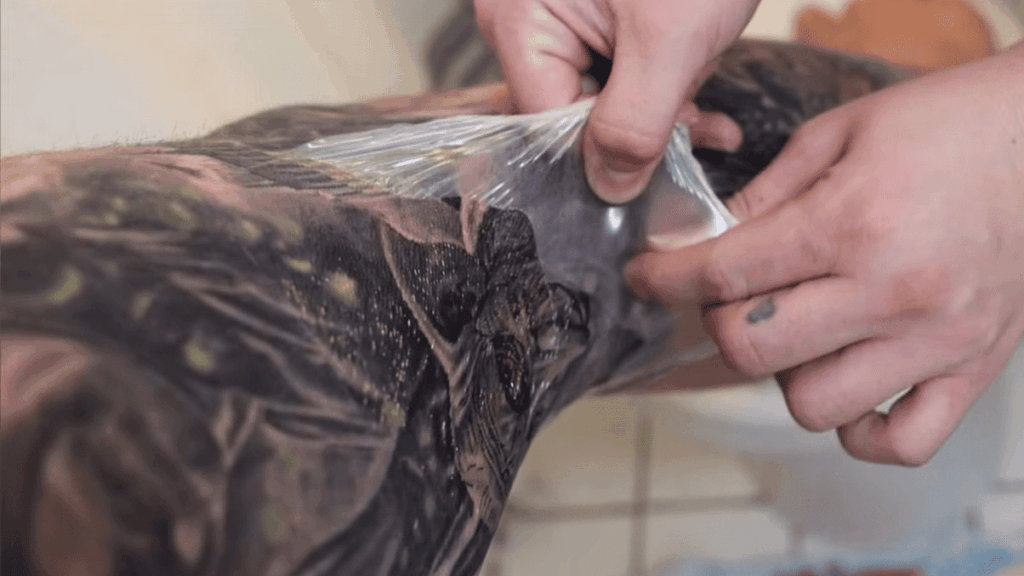
The protective film acts as a physical shield against environmental contaminants. It prevents dust, dirt, pet hair, and clothing fibers from sticking to your fresh wound. Even rainwater can introduce problems to sensitive skin.
Artists follow a specific application process. They clean the tattooed area thoroughly before applying a thin ointment layer. The plastic bandage is then secured with surgical tape to create an effective moisture barrier.
Protecting Your Ink and Preventing Infection
This temporary barrier does more than just block bacteria. It contains the natural plasma, blood, and excess ink that weep from the wound. This prevents staining on your clothes and maintains a clean healing environment.
The film also plays a crucial role in preserving your tattoo’s vibrancy. As Dexter Kay notes, it creates an artificial skin barrier that prevents premature scab formation. This helps keep the ink securely in place during initial healing.
While traditional plastic wrap remains common, many artists now prefer medical-grade alternatives. Both methods provide essential protection when used correctly for the appropriate duration.
How Long to Leave Saran Wrap on Tattoo?
Determining the right duration for your protective covering requires understanding several key factors. Expert opinions vary, but most agree on core principles for proper healing.
Recommended Time Frames and Expert Advice
Many professionals suggest a short initial coverage period. Sarah Louise recommends 2-4 hours for the first bandage. This allows excess plasma and ink to be absorbed.
Liv Farrington explains the benefits:
“A few hours gives any soreness time to settle and excess plasma/ink – that gooey stuff! – to leave the tattoo before it’s ready for a good wash.”
Timing often depends on your appointment schedule. Morning sessions typically mean evening removal. Night appointments may keep the covering until morning.
Factors That Influence Wrap Duration
Several elements affect how long your bandage should stay. Larger pieces often need extended protection. Body placement matters too—high-friction areas benefit from longer coverage.
Your individual healing characteristics play a role. Some skin produces more plasma, requiring earlier cleaning. Always follow your artist’s specific instructions for optimal results.
| Method | Initial Duration | Follow-up Care | Key Considerations |
|---|---|---|---|
| Traditional Plastic Film | 2-4 hours | Optional rewrapping | Prevents moisture buildup |
| Extended Wrapping | 3-12 hours | Change every 4-6 hours | Requires frequent cleaning |
| Medical-Grade Adhesive | 24-72 hours | Single application | Advanced protection |
| Overnight Coverage | 8-12 hours | Morning removal | Convenient for night sessions |
Never leave the same covering on beyond 24 hours. Trapped moisture can lead to complications. Your artist’s guidance is always the best resource for your specific situation.
Alternative Aftercare Methods and Protective Barriers
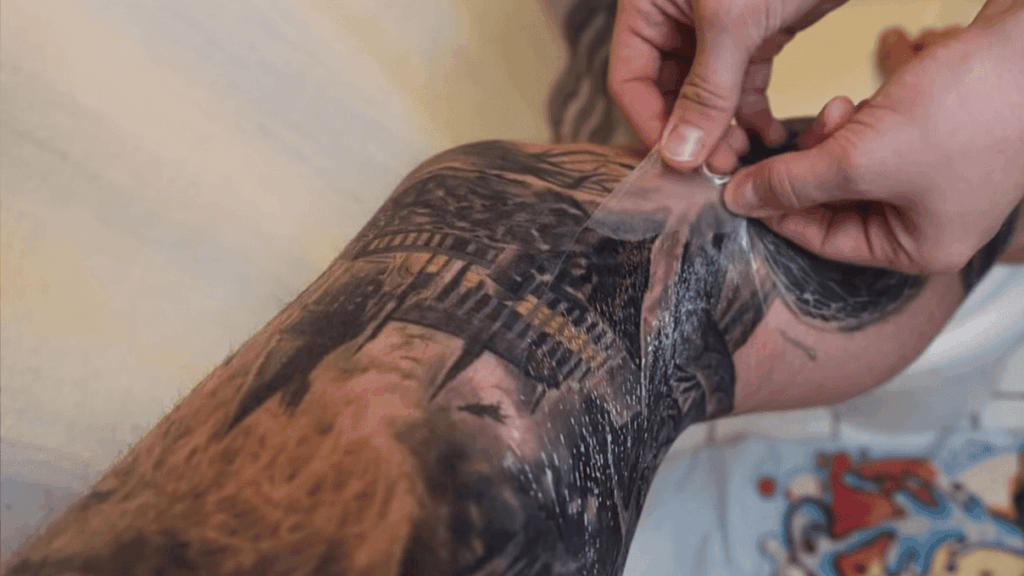
The world of tattoo protection has expanded with medical-grade alternatives. These advanced products offer superior healing compared to traditional plastic film.
Many artists now recommend specialized adhesive bandage options. Products like Saniderm and Dermshield provide excellent barrier protection.
Comparing Modern Protective Films
Medical-grade film was originally developed for burn treatment. This technology adapts perfectly to tattoo healing needs.
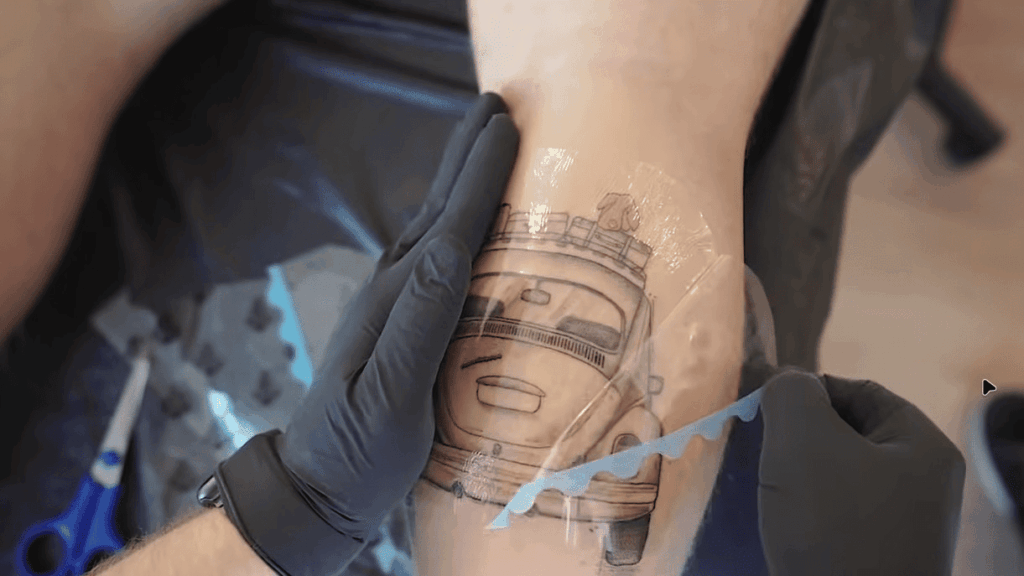
Unlike traditional wrap, these adhesive bandages stay on for several days. They create a breathable barrier that prevents bacterial entry.
The unique “ink sack” effect collects fluids under the transparent film. This eliminates frequent washing while protecting your skin.
| Protection Method | Duration | Key Benefits | Considerations |
|---|---|---|---|
| Traditional Plastic Film | 2-4 hours | Widely available, inexpensive | Requires frequent changing |
| Saniderm/Dermshield | 3-5 days | Waterproof, breathable barrier | Higher cost, adhesive sensitivity |
| Tegaderm Film | 2-4 days | Medical-grade protection | Professional application needed |
| Butterluxe Derma Protect | 3-4 days | Flexible, comfortable wear | Limited availability |
These modern method options significantly reduce infection risk. They maintain ideal moisture levels while preventing irritation.
Always consult your artist about the best aftercare approach for your specific tattoos. The right method ensures optimal healing results.
Preventing Infection and Supporting the Healing Process
Proper hygiene practices form the foundation of successful tattoo recovery. Your fresh ink needs careful attention to avoid complications and ensure vibrant results.
Proper Washing and Moisturizing Techniques
Always wash your hands thoroughly before touching your healing tattoo. Use antibacterial soap and warm water for at least 20 seconds.
Clean your tattoo with lukewarm water and mild, fragrance-free soap. Gently remove any plasma or excess ink without scrubbing. Pat the area dry with a fresh paper towel.
Wait 15 minutes before applying lotion. Use a thin layer of fragrance-free moisturizer 2-3 times daily. Too much product can clog pores and increase infection risk.
Tips to Avoid Over-Moisturizing and Skin Irritation
Apply lotion sparingly—a barely visible layer is ideal. Excess moisture creates a breeding ground for bacteria.
Artists have different opinions about cream under protective film. Some recommend it, while others warn it can cause skin irritation. Follow your specific artist’s guidance.
Watch for signs of infection like spreading redness or unusual warmth. Contact a doctor immediately if symptoms appear. Never pick at scabs during the healing process.
Conclusion
Your journey with a new tattoo doesn’t end when the protective covering comes off. Whether your initial protection lasts a few hours or several days, proper aftercare remains essential for preventing complications and preserving your ink.
Make sure to follow your artist‘s specific instructions throughout the entire healing process. The care you provide during these critical first weeks directly impacts how your tattoo will look for years to come.
Remember that the area needs attention until all scabs have naturally fallen off and the tattoo fully heals. This process typically takes 4-6 weeks, but the vigilance required each day is well worth the beautiful results.
With proper care, your tattoos will remain vibrant artwork you can proudly display for a lifetime. The temporary effort to keep tattoo protected ensures lasting satisfaction with your body art.