
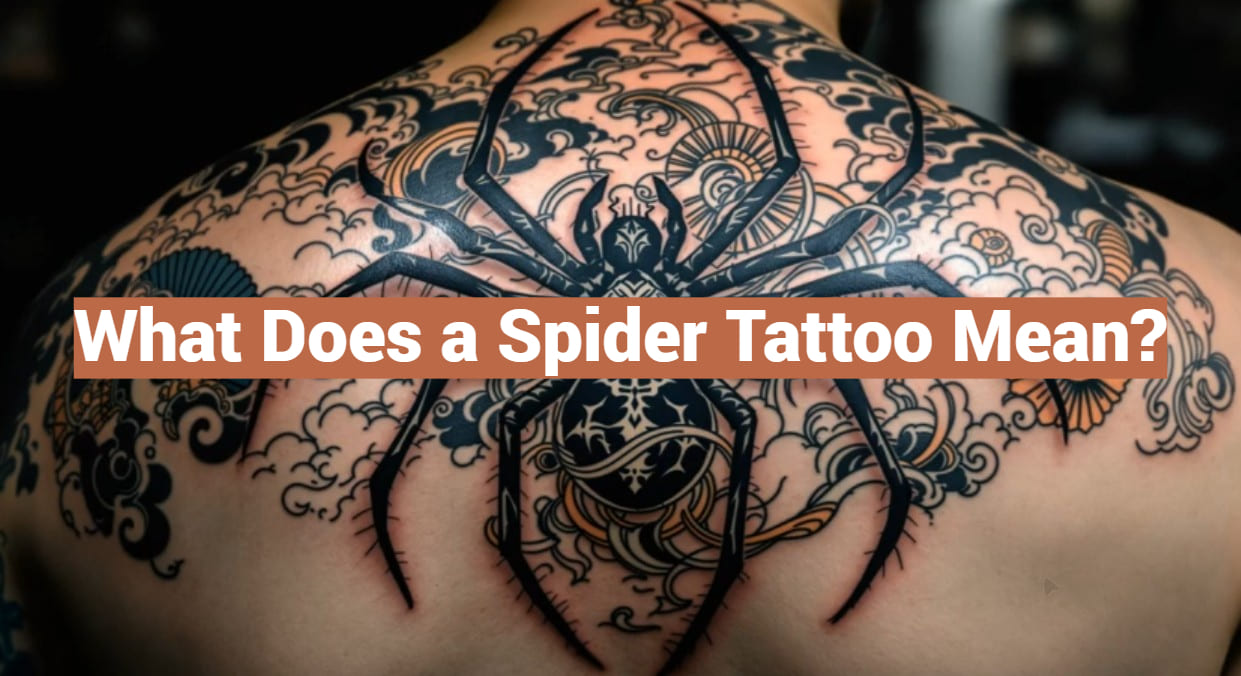
Did you know that spider tattoos have surged in popularity over the last few years? This trend reflects a broader cultural fascination with darker aesthetics, including goth themes and intricate designs. Many individuals choose these tattoos for their rich symbolism and personal significance.
These tattoos can represent a variety of concepts such as patience, protection, and creativity. The spider is often seen as a symbol of transformation and personal growth, making it an appealing choice for many. As we explore this topic, we’ll delve into the cultural interpretations tied to figures like Arachne, Anansi, and the Native American Spider Woman.
Placement and surrounding imagery can greatly influence how these tattoos are perceived. It’s essential to consider these factors, as certain designs may carry associations that affect their meaning. For instance, spider web tattoos can sometimes be linked to prison or gang culture, which may alter their interpretation.
Key Takeaways
- Spider tattoos symbolize patience, protection, and creativity.
- The popularity of these tattoos aligns with current goth aesthetics.
- Cultural figures like Arachne and Anansi enrich their meanings.
- Placement and surrounding imagery impact how these tattoos are viewed.
- Spider web tattoos may have complex associations requiring careful consideration.
Introduction to Spider Tattoo Symbolism
In recent years, the allure of spider tattoos has captivated many. These designs are not just visually striking; they carry deep meanings across various cultures. From Native American traditions to modern interpretations, spider tattoos symbolize patience, protection, and creativity.
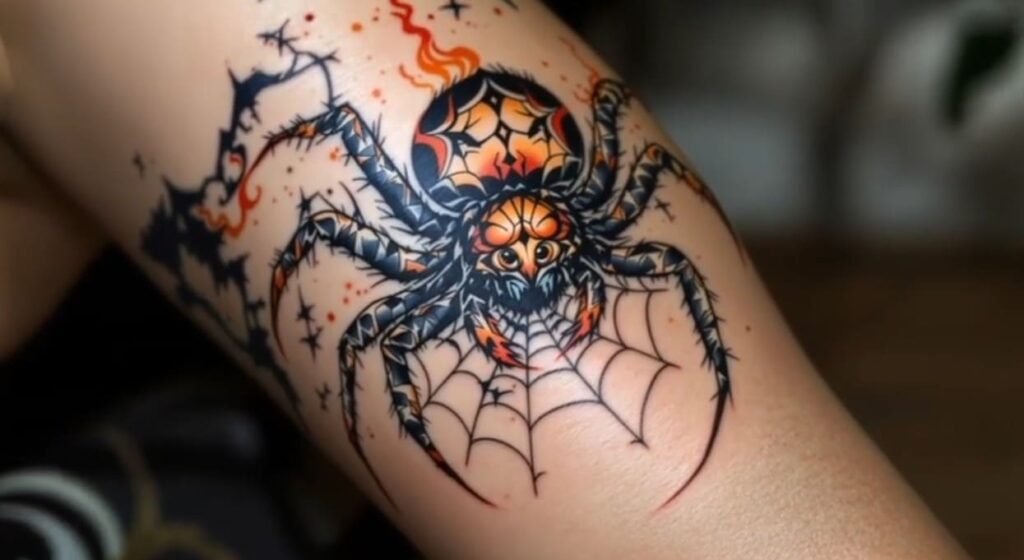
Television shows like Game of Thrones and Sandman have made darker aesthetics more popular, contributing to the rise of these tattoos. Current styles, such as realism and micro-realism, allow for intricate designs that resonate with many people.
Overview of Popular Trends and Meanings
Spiders are often seen as skilled weavers, with their webs representing life, connection, and fate. In Native American mythology, the figure of Na’ashjé’íí Asdzáá, the Spider Woman, teaches the art of weaving and embodies wisdom and protection.
Why Spider Tattoos Capture the Imagination
These tattoos appeal to those seeking designs that blend beauty with mystery. They offer personal stories wrapped in darker symbolism, making them a popular choice for many individuals.
| Symbolism | Cultural Significance | Examples |
|---|---|---|
| Patience | Various cultures | Web building |
| Protection | Native American | Spider Woman |
| Creativity | Global | Artistic designs |
The Cultural and Historical Roots of Spider Tattoos
Cultural traditions surrounding spider imagery have evolved, offering rich stories and meanings. These tattoos reflect diverse influences from various parts of the world, each adding depth to their symbolism.
In Native American culture, the Spider Woman, or Na’ashjé’íí Asdzáá, plays a vital role. She taught weaving and embodies wisdom, making her a significant figure in Navajo and Hopi traditions.
African folklore introduces Anansi, a clever spider known for his storytelling and creativity. This figure highlights the connection between wisdom and the art of narrative.
In European mythology, Arachne’s tale illustrates the consequences of pride in artistic skill. Her transformation into a spider by Athena connects the creature with themes of weaving and fate.
Japanese mythology presents the “kumo,” with the golden orb-weaver, or “kogane-gumo,” symbolizing luck. The shape-shifting Jorōgumo adds an element of mystery, showcasing the diverse interpretations of spider imagery.
| Cultural Influence | Key Figure | Symbolism |
|---|---|---|
| Native American | Spider Woman | Wisdom, weaving |
| African | Anansi | Creativity, storytelling |
| European | Arachne | Artistic skill, pride |
| Japanese | Jorōgumo | Transformation, mystery |
What Does a Spider Tattoo Mean?
The fascination with spider tattoos continues to grow, revealing deeper meanings and interpretations. Traditional symbolism often highlights the patience and persistence of these creatures. For instance, spiders can wait days or weeks after crafting their web before catching prey. This behavior embodies the idea of waiting for the right moment in life.
Protection is another key aspect, as spiders defend their homes and intricate webs. Their craftsmanship is evident in the precision of web construction, which showcases creativity and skill.
In modern contexts, individuals often choose spider tattoos to symbolize personal growth, resilience, or transformative experiences. The eight legs of a spider can represent the eight phases of the sun, connecting to cycles of life, death, and renewal.
Ultimately, the most meaningful interpretation of a spider tattoo depends on the wearer’s story, chosen imagery, and cultural understanding. Each design tells a unique tale, reflecting the beauty and complexity of life.
Designs and Styles: From Classic American to Realism
The variety of designs in spider tattoos reflects a blend of cultural influences and artistic expression. Artists today explore different styles, making each piece unique and meaningful.
For instance, Zimoon showcases realism with a stunning black-and-gray tattoo that features a Japanese Hannya mask. This design highlights intricate shadowing, enhancing the overall effect.
In contrast, Maksym Kuznetsov employs geometric and organic linework at Gon Tattoo in Berlin. His black spider weaving a web captures the essence of modern tattoo artistry.
Dark illustrations can incorporate elements like skulls and red shading, as seen in Swan’s work at TAFAC in Seoul. These designs often convey deeper themes of mortality and resilience.
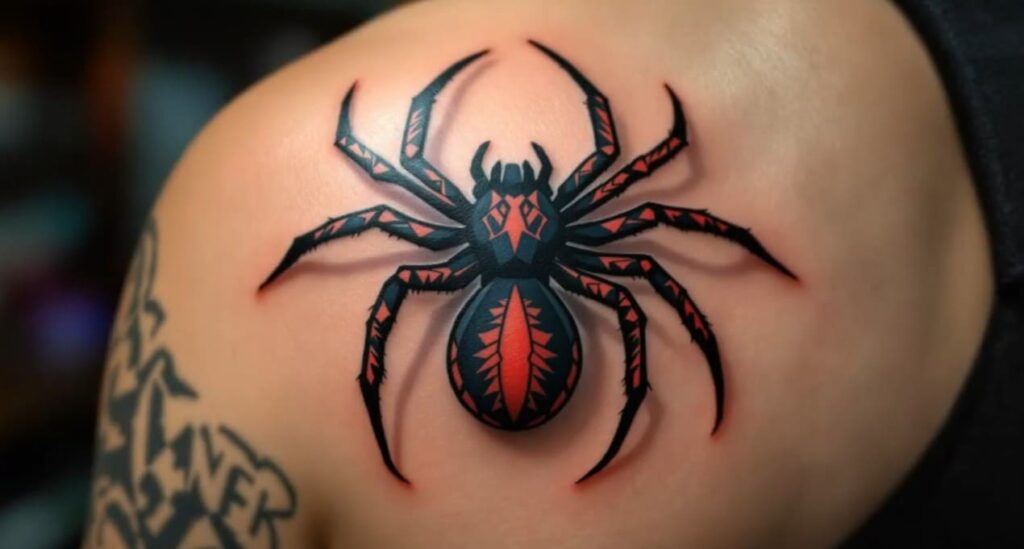
Classic American styles emphasize bold lines and vibrant colors. Artists like Tom Butts and Tony Perez utilize thick outlines and limited shading to create striking visuals.
Minimalist designs also gain popularity, allowing for personal customization. Incorporating symbols like roses or skulls adds layers of meaning, connecting beauty with transformation.
Spider Web Tattoos: Dual Meanings and Controversies
Spider web tattoos carry complex meanings that can shift based on context. Historically, these designs became strongly associated with U.S. prison culture during the 1970s and 1980s. For many, the segments of the web symbolize years spent incarcerated, with certain patterns indicating 10 or more years.
Furthermore, the Aryan Brotherhood has used spider web tattoos as markers of gang affiliation. This connection raises questions about the meanings behind these tattoos and their impact on society.
However, the narrative is evolving. Today, many people choose spider web tattoos to symbolize resilience, creativity, and personal growth. They reclaim the imagery, using it as a way to express their journey through life.
Before selecting a highly recognizable placement, such as on the elbow or neck, it’s wise to research local perceptions. Understanding these associations can help ensure that the tattoo reflects the intended message.
Spiritual and Mythological Aspects of Spider Tattoos
In many cultures, spider tattoos are not just designs but powerful symbols of spirituality and mythology. The spider web serves as a visual reminder of the interconnectedness of all living things. Relationships, decisions, and seemingly separate events can shape one another, creating a complex web of life.
Furthermore, the eight legs of the spider symbolize the eight phases of the sun, representing cycles of life, death, and renewal. This connection highlights the balance of existence and the recurring nature of our journeys.
Spider imagery also embodies a journey from illusion toward enlightenment and self-awareness. It reflects transformation, resilience, and personal growth, linking the solitary nature of the spider with the wearer’s process of overcoming challenges.
Ultimately, these tattoos can serve as private reminders of resilience, creativity, and continued personal growth, making them deeply meaningful for those who choose to wear them.
Placement and Personalization Tips for Your Spider Tattoo
Choosing the right spot for your spider tattoo can enhance its visual impact. Common placements include the shoulder, arms, back, and belly. Each location offers unique advantages in terms of visibility and available space.
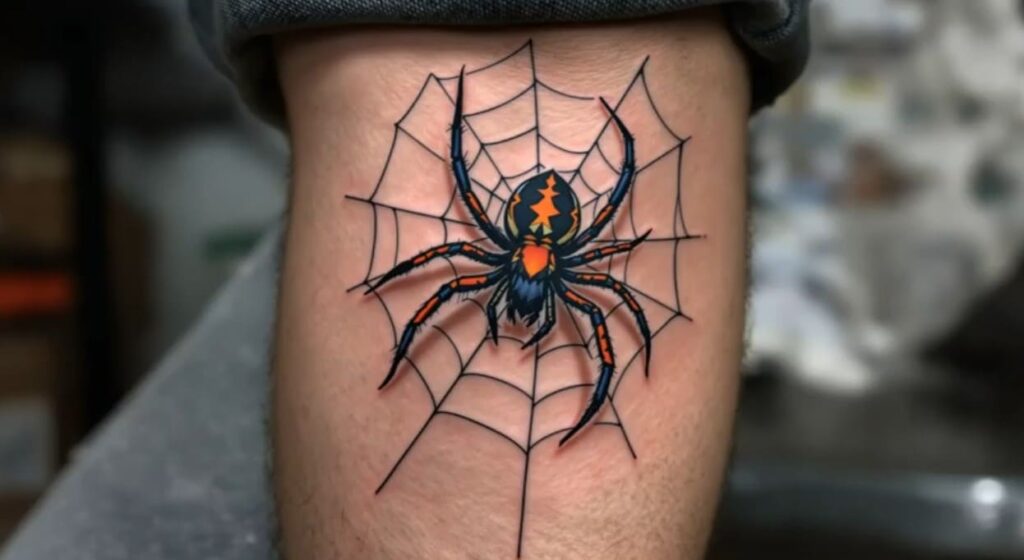
When considering a spider web tattoo, options like the elbow, forearm, neck, and back are popular. However, be cautious with elbow placements, as they may carry prison symbolism. Forearm and shoulder areas allow for larger designs, accommodating detailed elements like skulls or roses.
For those who prefer minimalist designs, locations such as the wrist, ankle, or behind the ear are ideal. These spots suit smaller tattoos while maintaining personal significance.
Customization is key to making your tattoo meaningful. Think about colors, symbols, and cultural references that resonate with your journey. Personal details can elevate the design, making it a true reflection of your story.
| Placement | Best For | Considerations |
|---|---|---|
| Shoulder | Visibility | Good for larger designs |
| Elbow | Web tattoos | May have strong associations |
| Forearm | Detailed designs | Visible and spacious |
| Wrist | Minimalist designs | Discreet and personal |
Conclusion
Ultimately, the allure of spider tattoos lies in their deep connections to personal stories and cultural narratives. These designs can symbolize patience, protection, and creativity, reflecting life’s complexities. Cultural figures like Arachne and Anansi enrich their meanings, showcasing a rich tapestry of symbolism.
It’s essential to research spider web tattoos, especially those on the elbow, as they may carry associations with incarceration or gang culture. Various styles, from realism to minimalist designs, offer numerous possibilities for personal expression.
The best tattoo design balances symbolism, placement, and artistic quality. Each tattoo tells a unique story, allowing wearers to carry forward their individual journeys with beauty and meaning.